본문
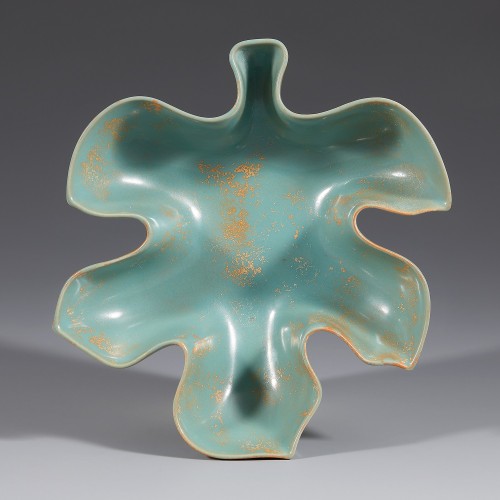
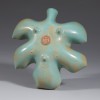
북송대 여요(汝窯)에서 제작된 나뭇잎 모양의 수반입니다. 나뭇잎의 갈라진 모양새를 표현하였으며, 얇은 기면과 부드러운 굴곡이 돋보입니다. 휘종 연간에는 자연의 형상을 모방한 도자기가 종종 제작되었습니다. 인위적이거나 과시적인 문양을 배제하고 자연물의 형태와 기운을 나타내고자 한 의도로 보입니다.
북송 5대 명요(여요, 관요, 가요, 균요, 정요) 중에서도 여요는 맑은 천청색 계열의 청자를 만드는 것으로 알려져 있습니다. 유약 자체의 질감과 색조를 중시한 여요 청자의 특징이 잘 드러납니다. 유물의 표면에는 소성 과정에서 나타난 자연스러운 철분 반점이 보입니다. 바닥 면에는 다섯 개의 지정지마흔(支釘芝麻痕)이 남아 있습니다. 이는 소성 시에 뾰족한 지정 위에 올려 생긴 흔적입니다.
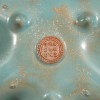
바닥 중앙에는 '政和五年淸凉寺禦製(정화5년청량사어제)'라는 관지가 있습니다. 정화는 북송 휘종의 네 번째 연호로, 정화 5년은 1115년입니다. 청량사는 북송대 여요가 위치했던 하남성 여주에 있던 사찰입니다. 이 유물은 1115년에 청량사의 여요에서 제작되어 황궁에 공납된 것으로 추정됩니다. 제작 연대와 장소가 명확한 몇 안 되는 귀중한 도자기입니다.
器物为北宋汝窑烧制的叶形水盘。生动表现出叶脉分岔的自然形态,胎体轻薄,曲线柔和流畅。徽宗年间,模仿自然形象的陶瓷作品屡见不鲜,此类作品摒弃了人工与炫饰性的纹样,着意表现自然景物的形态与气韵。
在北宋“五大名窑”(汝窑、官窑、哥窑、钧窑、定窑)之中,汝窑以烧制澄澈温润的天青色青瓷而著称。本器充分展现了汝窑青瓷重视釉质肌理与色调变化的典型特征。器表可见烧成过程中自然形成的铁斑痕迹,底部留有五处支钉芝麻痕,为烧造时置于尖状支钉上所产生的痕迹。
器底中央刻有“政和五年淸凉寺禦製”款识。“政和”为北宋徽宗的第四个年号,政和五年为公元1115年。清凉寺位于河南汝州,为北宋时期汝窑所在地。由此推断,该器应为1115年于清凉寺汝窑烧制,并进贡皇宫之作,是目前制作年代与地点均较为明确的珍贵陶瓷实例之一。
This is a leaf-shaped water basin produced at the Ru kilns during the Northern Song Dynasty. It depicts the split form of a leaf, distinguished by its thin walls and gentle curves. Ceramics mimicking natural forms were frequently produced during the reign of Emperor Huizong. This appears to reflect an intention to capture the form and spirit of nature while excluding artificial or ostentatious patterns.
Among the Five Great Kilns of the Northern Song (Ru, Guan, Ge, Jun, and Ding), Ru ware is renowned for creating celadon with a clear celestial blue hue. This piece exemplifies the characteristics of Ru celadon, which emphasizes the texture and color of the glaze itself. Natural iron spots, formed during the firing process, are visible on the surface. The base retains five "sesame seed spur marks", which are traces left by the pointed supports used during firing.
In the center of the base, there is an inscription reading "Zhenghe Wunian Qingliangsi Yuzhi" (Imperial Made at Qingliang Temple in the 5th Year of Zhenghe). Zhenghe is the fourth reign title of Emperor Huizong of the Northern Song, and the 5th year of Zhenghe corresponds to 1115. Qingliang Temple, located in Ruzhou, Henan Province, was the site of the Northern Song Ru kilns. It is presumed that this artifact was produced at the Qingliang Temple Ru kiln in 1115 and presented as tribute to the imperial palace. It is one of the few precious ceramics with a clear production date and location.