본문
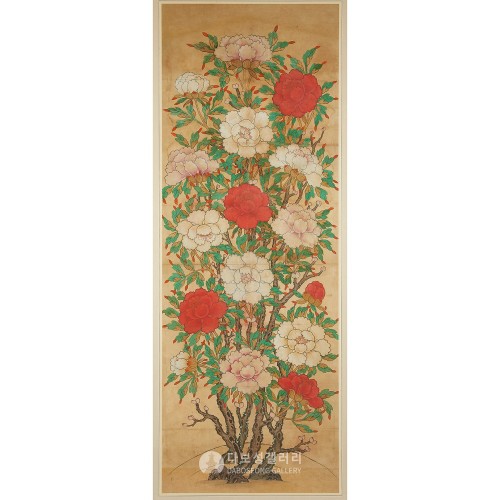
조선시대 궁중에서 제작된 채색 모란도입니다. 화면 하단의 굵은 줄기에서 여러 갈래로 가지가 뻗습니다. 가지 위에는 만개한 모란꽃과 봉오리를 반복적으로 배치하여 화면을 수직으로 채웁니다. 꽃은 백색, 홍색, 담홍색 등 다양한 색조로 채색되었습니다. 잎은 녹색 안료로 채색한 뒤 엽맥(葉脈)을 선으로 덧그렸습니다. 잎의 일부는 붉은 색으로 표현하여 색채 대비를 이룹니다.
괴석이나 동물 등의 다른 도상 없이 모란 나무만으로 화면을 구성하였습니다. 큰 꽃을 화면에 반복적으로 배치하고 선명한 색채를 사용하여 평면적으로 표현하였습니다. 사실적인 묘사보다는 도식적이고 화려한 표현이 강조됩니다. 이러한 구성은 조선 후기 모란도에서 나타나는 경향과 관련됩니다. 이 시기에는 모란의 비중이 커지고 화면 전체를 채우는 풍성한 표현이 두드러집니다. 특히 조선 말기에는 모란만을 단독으로 크게 그린 모란도가 유행하였습니다.
당시 모란은 꽃 가운데 왕이라는 뜻의 '화중왕'(花中王) 혹은 '부귀화'(富貴花)로 불렸습니다. 부귀와 번영을 상징하는 길상적인 소재로, 종묘제례와 왕실 혼례와 같은 가례(嘉禮), 제례(祭禮) 등의 왕실 의례 공간에서 사용되었습니다. 또한 각종 의궤와 문헌 기록에 따르면 궁중 도화서(圖畫署)에 소속된 화원들에 의해 제작된 것으로 알려져 있습니다. 특히 이처럼 대형으로 제작된 모란도는 많은 재료와 인력이 투입되어야 했기에 민간에서는 보기 어려운 유형입니다.
━━━━━
此为朝鲜时代宫廷制作的彩绘牡丹图。画面下方以粗壮的主干为起点,枝条向上分出多重分枝延展。枝干之上反复描绘盛开的牡丹花与花蕾,使画面在垂直方向上层层铺陈、充满画面。花朵以白色、红色、淡粉色等多种色调设色。叶片先以绿色颜料敷色,再以线条勾勒叶脉,其中部分叶片以红色点染,与绿色形成鲜明的色彩对比。
画面未配置奇石、禽兽等其他图像元素,而仅以牡丹树构成整体构图。画中以硕大的花朵反复排列,并以鲜明浓丽的色彩进行较为平面的表现,强调装饰性与华丽感,而非写实描绘。这种构图方式与朝鲜后期牡丹图的发展趋势密切相关。当时牡丹在画面中的比重逐渐增加,以繁盛饱满的形式铺满画面的表现尤为突出。尤其在朝鲜末期,仅以牡丹为主体并加以放大描绘的牡丹图十分流行。
在当时,牡丹被称为“花中王”或“富贵花”,象征富贵与繁荣,是寓意吉祥的重要题材。此类图像常用于宗庙祭礼、王室婚礼等王室礼仪空间。根据各类《仪轨》与文献记载,这类作品多由隶属于宫廷图画署的画员所绘制。尤其像这样尺幅宏大的牡丹图,因需投入大量材料与人力,在民间较为罕见,具有鲜明的宫廷绘画特征。
━━━━━
This is a colored peony painting produced in the royal court of the Joseon dynasty. From a thick trunk rising at the lower part of the composition, several branches extend outward. Fully blossomed peony flowers and buds are repeatedly arranged along the branches, filling the composition vertically. The flowers are colored in various tones, including white, red, and pale pink. The leaves are painted with green pigment, and the veins are added with fine lines. Some of the leaves are rendered in reddish tones, creating a contrast in color.
The composition consists solely of a peony tree, without other motifs such as rocks or animals. Large blossoms are repeatedly arranged across the surface, and vivid colors are used to produce a planar effect. Rather than realistic description, schematic and decorative expression is emphasized. This composition is related to the tendency seen in late Joseon peony paintings, in which the prominence of peonies increases and the composition becomes densely filled across the entire surface. In particular, during the late Joseon period, peony paintings depicting only peonies on a large scale became popular.
At the time, peonies were called “Hwajungwang” (花中王, the king among flowers) or “Bugwihwa” (富貴花, the flower of wealth and honor). As an auspicious motif symbolizing prosperity and abundance, they were used in royal ceremonial spaces such as ancestral rites at the Jongmyo Shrine and royal wedding rituals. According to various Uigwe records and historical documents, these paintings were produced by court painters belonging to the Dohwaseo, the royal bureau of painting. In particular, large-scale peony paintings like this required substantial materials and labor, making them difficult to encounter outside the royal court.