본문
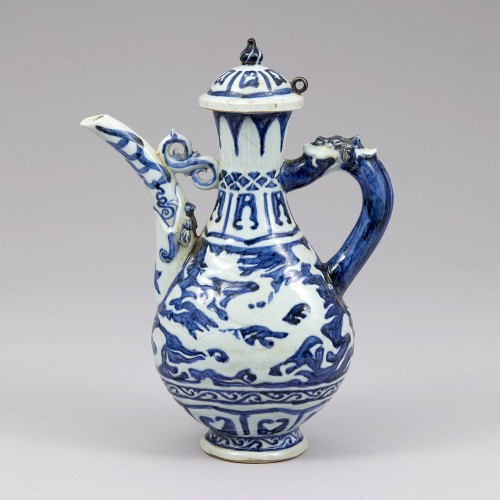
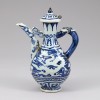
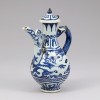
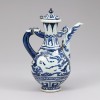
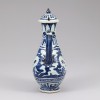
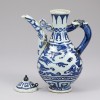
원말명초에 제작된 청화백자 운룡문 용수 주자입니다. 구연이 벌어지고 목이 잘록하게 들어간 뒤 몸체는 풍만하며, 굽은 짧게 벌어진 안정적인 형태입니다. 주구와 손잡이는 용의 머리를 본떠 조형하였습니다. 주구는 용의 입에서 물이 흘러나오는 듯한 모습으로 표현되었습니다. 손잡이 또한 용이 물고 있는 듯한 형상으로 역동적인 인상을 더합니다. 뚜껑에는 꽃봉오리 모양의 꼭지를 세우고 작은 고리를 부착하였습니다. 이 고리는 끈 등을 주자에 연결해 뚜껑의 유실을 방지하기 위한 용도로 보입니다.
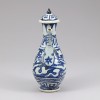
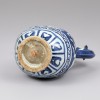
유물 전반에는 문양이 빼곡하게 시문되어 있으며, 일부는 양각으로 도드라지게 표현되었습니다. 뚜껑과 목, 저부에는 기하학 문양과 연판문을 둘렀습니다. 몸체 중앙에는 구름 사이를 오르내리는 용의 형상을 시문하였습니다. 특히 용의 비늘과 윤곽, 눈과 입 등을 입체적으로 표현하여 생동감이 느껴집니다. 운룡문은 길상과 상서로움을 상징하는 구름과 권위와 천명을 상징하는 용이 결합한 도상으로, 제왕적 위엄과 복된 의미를 함께 담고 있습니다. 제작 과정이 까다로운 고급 유물로, 주로 왕실이나 해외 외교 선물용으로 제작되었습니다. 청화 안료인 코발트는 중국 내 산지뿐 아니라 서아시아 지역에서도 수입되었는데, 이는 청화백자가 국제적 교류 속에서 제작되었음을 보여주는 단서입니다.
━━━━━
此为元末明初制作的青花云龙纹龙首执壶。执壶撇口,细颈,鼓腹,圈足较短且外撇,整体造型稳重而匀称。流口与把手均仿龙首造型:流口表现为龙口吐水之态,把手则似巨龙衔握器身,造型生动,富有动感。壶盖上有花蕾形钮,并附有一小系,推测用于系绳以防止壶盖遗失。
器物通体纹饰繁密,部分细节以阳刻形式突出表现。壶盖、颈部及底部周围饰以几何纹与莲瓣纹;腹部中央绘云间腾跃的龙纹。阳刻龙的鳞片、轮廓,以及眼睛和嘴巴等,显得格外生动。云龙纹将象征吉祥瑞兆的云纹与象征权威与天命的龙形相结合,寓意帝王威仪与祥瑞福祉并存。此类器物制作工艺复杂,属高等级器物,多用于宫廷使用或作为对外外交馈赠。青花所用的钴料不仅来源于中国本土,亦有自西亚地区输入的成分,显示出青花白瓷是在广泛的国际交流背景下制作而成的重要例证。
━━━━━
This blue and white porcelain ewer features a dragon and cloud design and dates from the late Yuan to the early Ming dynasty. The vessel has a flared mouth, a constricted neck, and a voluminous body, supported by a short, spreading foot that provides a stable form. The spout and handle are modeled after a dragon's head. The spout is crafted to look as if water flows from the dragon's mouth, while the handle resembles a dragon biting the vessel, creating a dynamic impression. The lid is topped with a bud-shaped finial and attached with a small loop, which appears to have been used to secure the lid to the ewer with a cord to prevent loss.
The entire surface of the artifact is densely decorated with patterns, with some details raised in relief. Geometric designs and lotus petal bands encircle the lid, neck, and base. The center of the body depicts a dragon ascending and descending amidst clouds. In particular, features such as the dragon's scales, outlines, eyes, and mouth are depicted three-dimensionally, imbuing the figure with vitality. This "cloud and dragon" pattern combines clouds, symbolizing auspiciousness and good omens, with the dragon, representing authority and the Mandate of Heaven, thereby embodying both imperial majesty and blessings. As a high-quality artifact requiring a complex production process, such pieces were primarily produced for the royal court or as diplomatic gifts. The cobalt pigment used for the blue decoration was sourced not only from China but also imported from West Asia, serving as evidence that blue and white porcelain was produced within the context of international exchange.